The deplorable global conditions relating to children’s hunger and malnourishment are the result of a combination of factors. Curiously, it is not the result of a lack of food that has led to the current state of affairs. Rather the exigencies are more directly attributable to the fact that many communities lost the ability to feed themselves when Colonial powers reallocated land and resources.

According to a publication released by The Institute for Food and Development, families were moved from fertile farm land to fragile and unproductive areas. For example, when Mexico was still a Spanish colony, indigenous people were forcibly relocated to a Highland that could not support the population while a few wealthy landowners gained control of the most productive tracts of land where crops are now grown for export to the United States. Consequently, even today, these people are suffering as the result of colonial policies.
While it may seem logical that lack of food would lead to millions of starving children world wide, the problem is instead rooted in the economy of the poorest countries. An article written by Michel Chossudovsky (Department of Economics) points out that leaders of poor nations can create more revenue by exporting agricultural products to rich countries than by distributing food to feed their own people. Therefore, although the resources exist to compensate for the millions of malnourished children, it has never been economically beneficial for the leaders of these poor nations to care for their suffering people.
 In fact, poverty, a lower standard of living, lack of education, violence and lack of access to goods and services has almost guaranteed increased children’s malnutrition over the years (Visit Bread for the World for more information). Under all or any of these unfortunate conditions families have had a hard time obtaining adequate nutritious food. This becomes a vicious cycle where undernourishment becomes uncontrollable and climbing numbers of children become ill. Undernourishment negatively impacts the health of children, which results in stunted growth and brain development, sometimes leading to mental retardation.
 According to statistics provided by the World Food Programme, from 1970 to 1977 the number of hungry people dropped from 959 million people to 791 million people mainly due to the reduction of malnourished individuals in China and India. However in the late 1990’s the number of hungry people world wide began to increase at a rapid rate of 4 million individuals per year in developing nations. By 2001-2003, the total number of undernourished people globally had risen to back to a high of 878 million people. Formulated on historical events and continued by the ongoing problems of the current society, the lack of good child health on a global scale continues to be a serious problem.
To read further about the myths associated with world hunger, visit:
www.hartford.com
CURRENT SITUATION:
Child nutrition is a huge epidemic throughout the world today. Although there are organizations, like United Nations Children's Fund(UNICEF), Food And Nutrition Technical Assistance(FANTA), and World Health Organization who are taking action to cut down on the problem of malnutrition, millions of children in many developing countries are still dying and suffering from malnutrition. The focus on a global level is on three main countries in three parts of the world. They are Niger and Ethiopia in Sub-Saharan Africa and India in South Asia.
According to a UNICEF Press release, "more than one quarter of all children in third world countries under the age of five are underweight." Also according to UNICEF, "poor nutrition contributes to more than half of all child deaths, about 5.6 million per year." Malnutrition is directly linked with poverty; this is why many developing nations have higher rates of malnourished children. Also, FANTA says that the effects of inadequate household access to food, infectious diseases, and inadequate breastfeeding and feeding practices lead to illness, stunted growth, nutrient deficiencies, delayed development, and death in malnourished children.

Developing nations depend on agriculture for the majority of food consumption. Therefore the nations’ people are really dependent on the weather. If harvest seasons are disastrous, with floods, droughts, or locust infestation of crops, then the people suffer from extreme food shortages. And if families don’t get food, children don’t get food. In July 2005, according to a UNICEF news article on a Niger Food Crisis, swarms of locusts consumed almost 100% of the crops in some parts of Niger in a 2004 farming season. These swarms, along with deficient rainfall, created a food shortage, affecting 3.3 million people, 800,000 of who were children under 5 years old.
In response to this disastrous food shortage, UNICEF in January 2005 delivered 41 tons of therapeutic milk, 1.5 tons of peanut butter and 614 tons of grain to 62 villages in Niger, benefiting 198,000 inhabitants, 40,000 of who were children under five. UNICEF also set aside $1,235,400 to reduce effects of food insecurity and treat children with severe acute malnutrition, a type of malnutrition defined when a child’s weight-to-height measurement is 70% below the average. However, $812,600 is still needed to provide immediate help to malnourished kids in Niger. UNICEF is an excellent organization, dedicated to helping save the lives of children in developing nations, but the right amount of funds are not always possessed.

Malnutrition in children is a serious problem in the African country of Ethiopia. According to a UNICEF news note on Ethiopia’s dying children, malnutrition kills half a million Ethiopian children per year. Also according to the article, 7 million Ethiopian children suffer from malnutrition each year. And severe acute malnutrition annually kills approximately 170,000 untreated Ethiopian children. Many forms of malnutrition can be reduced if these children received vitamin A supplements every six months. According to the article, this implementation of supplements could reduce the child mortality in Ethiopia by 23%. However, this isn’t so easy because Ethiopia can only treat 5,350 malnourished children at any one time. But 5,350 is only a fraction of the Ethiopian children suffering and dying from malnutrition.
According to a statistical survey on Child Survival and Malnutrition in Developing Countries by FANTA, child mortality was the highest among the regions of Sub-Saharan Africa at any time. Because of this, Africa recognized in 2004 that they needed to take further actions in alleviating the nutrition problem. On October 2004, according to a UNICEF Press release on Africa’s Hidden Hunger, Africa started to fight against vitamin and mineral deficiencies among children and women by fortifying staple foods. Over two-thirds of countries in Sub-Saharan Africa now have access to iodized salt and millions of children have been given vitamin A supplements. Just by children meeting vitamin and mineral requirements of vitamin A, iodine, and iron, Africa can achieve UNICEF’s Millenium Development Goals, of eliminating extreme poverty and hunger, improving maternal health, and reducing child deaths by two-thirds by 2015. UNICEF has all the right resources and materials to do this; the only problem is their ability to reach out to every child who needs help. UNICEF made an appeal for $39.7 million to help the problem of children health and nutrition in Ethiopia in 2005, but was $23.3 million short of their goal halfway through the year. The problem is that even though services and organizations are doing their best to improve the nutrition in developing nations, the funds they need is never enough to help as many kids as they would like to help.

From Africa, moving to Asia, child malnutrition in India, according to a Chicago Tribune article on underweight Indian children, remains among the worst in the world. Although India’s economy is growing, 43% of Indian children under five years of age are underweight. One major effect of this is stunted growth in height. Although one would expect children living in urban areas to be healthier due to the increased availability of food, 33% of urban children are underweight according to the Chicago Tribune article. The South Asia countries of India, Bangladesh, and Pakistan account for half of the whole world’s underweight children, according to a UNICEF Press release on the world’s underweight children. Unlike many African nations, India has not made much progress on child health and nutrition. Although some help is given to India’s malnourished children, there is much more attention focused on African nations, which are more underdeveloped than India, whose nation is growing quite rapidly. However, India’s country has forgotten much about their children and keeping them healthy.
WHAT CAN BE DONE:
There is a huge gap between what has to be done and what is being done on the issue of child nutrition. It is so easy to make promises and discuss the issue but not many people can actually say they took action and made a difference. So we are saying, on a larger scale, people need to stop promising change and start taking action. The biggest thing we need to do to make an impact is get our country involved.
The United States of America is one of the nation's most well developed countries. Because of this fact, we have a responsibility to invest our time, money, and hearts into the well being of other developing countries. The two biggest ways the United States government can make a difference on other countries whose children are suffering from malnutrition are to donate money and provide physical aid directly to certain countries.
Americans and the American government together can make a huge difference on countries that have malnourished children by simple donating money and supplies. It is important that our government and Americans who are better off than others around the world donate even a little of what they have, because a little makes a difference. Your government could donate larger sums or money and aid such as food, healthcare, and brochures about child nutrition.
The second biggest way our country can help other countries is to directly send people from organizations such as UNICEF and FANTA to various developing countries with malnourished children. This kind of help can be the most impacting on the people and countries at large that have a problem with children malnutrition. The world needs people, especially doctors and teachers, offering healthcare and information about children nutrition. This is where we can get to the root of the problem by informing children and their parents at a young age of what kinds of food choices to make. With the combination of the both donations and education we can all help each other.
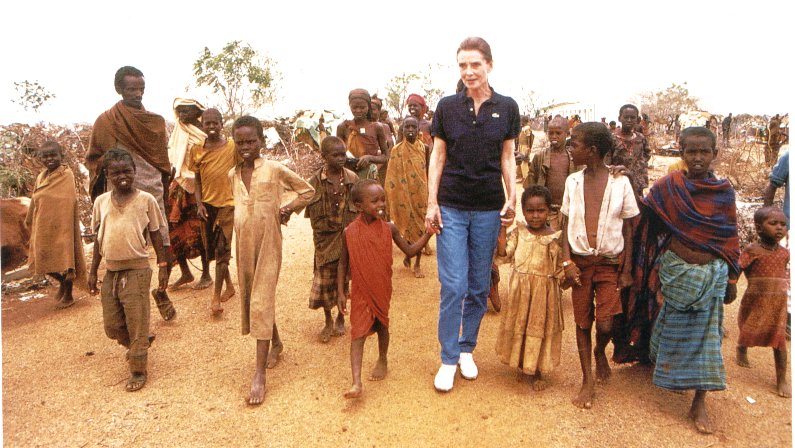
It is obvious that we are all interdependent. Currently, the well-developed countries are not helping those countries that are developed, thus leaving the developing nations behind. If all the developed countries were to donate a little time and money, the world and its people would be better off. It is definitely okay to think "big" because most countries on the planet have both money and people willing to volunteer. The first change we would want to see in this issue of children malnutrition globally is just the gesture of all the countries deemed "well-off countries" to donate money or send aid in the form of volunteers to countries with children that lack nutrients in their everyday life.
Today, the United States specifically is lending a hand in the rebuilding of Iraq. Other countries need to get involved. Although the US efforts focus on the rebuilding of this country, this is a huge step to bringing back nutrition into the lives of the children living there. We feel like other countries do not offer help for other countries because they are so worried with the well-being of other countries that they don't realize the countries around them are suffering more. We need to all think a little less of our needs and more of those needs for the people around us.
INDIVIDUALLY, WHAT YOU CAN DO TO HELP:
Activism/Advocacy
-Organize a bunch of friends to go take trips to other countries to help children in hospitals who are suffering from malnutrition; or just be there for moral support
-Inform teachers and certified doctors about the situation of children malnutrition not just in the United States but also in other places around the world. Then persuade them to form an alliance and set up clinics around the world, specializing in malnourished children.
-Create a program that donates leftovers to starving children around the world through programs such as Habitat for Humanity or Kiva(which helps you lend resources and money to empower others).
Charity/Philanthropy
-Donate money to organizations that help with research of children malnutrition and the aid to those children who need it.
UNICEF
FANTA
School Nutrition Association
World Health Organization
Red Cross
Haiti Children Wish
Global Health
Health Shares
Kid's Nutrition Report
GENI
-Help out at a children’s health aide center around the world

Citizenship
-Vote for leaders who will extend some of the luxuries the U.S. towards other countries
-Write letters to huge food companies (such as Nature Valley) urging them to help you in your efforts to stop malnutrition in kids by donating food and other aide to those who need it around the world.
-Join the armed forces, and help distribute aid to starving children around the world (particularly in Iraq as of today’s war)
-Ask congress from our government to help provide aide to other countries around the planet. An important factor is electricity because electricity is what fuels refrigerators, medical machines and supplies, food transportation, etc. Therefore ask our congress to help improve or suggest new easy access and cheap energy sources to use for other nations
Direct Service
-Organize a couple of your close friends and travel to other parts of the world, volunteering in different aid stations, countries, and villages.
-Provide mental support, physical support, and donations to those children in dire need of those services.
-Provide dinner once a week to a homeless shelter
-Create a website with background information on the problem of child nutrition and helpful tips and contacts for those who don’t know how to help and for those who need help.
Lifestyle/Personal Gestures
-Spread the word about global poverty leading to children malnutrition to your family and friends, hoping the will further spread the word and start a huge uprising and support for this global issue.
-Share positive stories with other of how you helped or how helping this issue impacted you, hoping to gain more help to fight the issue of child malnutrition on a global scale.
-Eat half of what your eyes tell you to. (Eat only what it takes to be filled 80%), in respect to those children starving around the world
-Adopt a child from a struggling situation, hopefully bringing them out of malnutrition.
-For children who would like to make a difference and have fun, you can volunteer for organizations such as Red Cross and Unicef that help poverty stricken towns and villages by providing donations and services to those in need.
-Example: Trick-or-Treat for Unicef (UNICEF)
-Subscribe to online newsletters and organizations to be updated on the issues concerning children and their nutrition around the world.
-Kids Nutrition Report: An organization that provides you with newsletters and e-mails informing you of different specific happenings around the world concerning improvements or problems on the subject matter.
-Kid's Nutrition Report
Public Scholarship
-Donate money to organizations that provide research and statistics on the number of children in with malnutrition.
-USDA
-Shared Inc.
-Conduct your own research and qualitative observations by taking trips to different areas around the world with child nutrition problems, documenting in words and pictures, then create brochures and distribute them, advertise your findings through sources of media.
Religion/Spirituality
-Pray for those not as fortunate as you
-Organize a trip with your church to areas around the world that are poverty stricken. Open your eyes to those around you and realize how fortunate you are. Help provide aide and happiness in their lives. Bring food and donation items for children to eat.
Social Entrepreneurship
-Start a company or non-profit organization that devotes itself to the efforts to improve child nutrition around the world (such as Kiva)
-If you are a student and looking for a more reasonable way to help, create a school club that will devote its efforts to the cause.
-Join up with a parent organization such as Unicef
VIDEO CLIPS:
"Living with Hunger in Ethiopia"
"Children who have nothing"
World Food Programme-
To watch movies addressing the causes of malnourished children (i.e. Warfare, HIV aids, natural disasters, etc.) please visit:
www.wfp.org


8 comments:
Mari Miyoshi
Educational post. I had heard before that world hunger problems were not due to lack of food but instead to poor distribution, but I did not know that the reasons behind it were economic. However, this makes me question some of the proposed solutions. If the governments of these poor sub-Saharan countries find it more profitable to export than to allow consumption, then how do we know that the money that we are donating will not get soaked up by the corrupt government? I guess that is every miser's excuse for not donating, but the last thing I would want my money to do would be to fund a weapons program or something. Even if the money does reach the people, it seems as though educational, economic, and perhaps political, reforms would be more helpful than monetary handouts in the long run. "Give a man fish and he will eat for a day- but teach a man to fish and he will eat forever".
Your post, while interesting, overlooks one major cause of malnutrition and hunger worldwide: despotism. Rulers such as Robert Mugabe, the tyrannical leader of Zimbabwe, contribute more, through secret police, greed, and sheer incompetence, to malnutrition than any other factor. Yet, sadly, the African Union, United Nations, and other such international groups, refuse to intervene. One of the most effective ways of ending malnutrition is through political pressure, or brute force, aimed at the ending of these regimes.
Also, just saw Mari's post. Agree.
I completely agree with Mari and Richard. From a larger perspective, we shouldn't give money without knowing what will be done with our contribution. Also, I'm questionable about your comment about how America should put in our money, effort and 'hearts' to this cause. Does America ALWAYS have to intervene to make the world a better place? We should consider what it is costing us as a nation before we step into other global affairs.
As I have mentioned in comments on other economic problems, a great deal of hunger and malnutrition problems come from local governments unable to establish efficient social systems or policies. Tyrannical rulers put little care in the welfare of the people. They instead put more importance on maintaining their own power. Infrastructure must be built, and economic stability will follow suit. Hunger and malnutrition will remain a devastating problem in these countries until their is international and local cooperation to improve these countries.
I agree with Mari, Richard, Trina, and Thomas. I just thought I'd also point out that we have been trained from a young age to help global poverty. In second grade, we collected money for unicef on halloween instead of candy, and we've also raised money as a class. Although that raised our awareness, and contributed to the lives of several people, I do agree that reforms should be put into action as opposed to more charities.
oh and I'm alexa
I just learned in my spanish class about the severe malnutrition of children in Guatemala. It has the worst malnutrition rates in all of Latin America and it has huge repercussions on the country. More than half of the countrys population is age 18 or younger and I imagine this is because many lives have been shortened by malnutrition. All of the young people have to fight for a place in one of the few schools, and then fight for a legitimate job. All of the children who don't make it into either end up in gangs. It is a really sad cycle.
-Alana
Hello. This post is likeable, and your blog is very interesting, congratulations :-). I will add in my blogroll =). If possible gives a last there on my blog, it is about the Pen Drive, I hope you enjoy. The address is http://pen-drive-brasil.blogspot.com. A hug.
Post a Comment