In the post World War I decade, from 1918-1920, nutritional deficiencies were common and not easily curable because fresh vegetables and meat were not readily accessible (King 126). One out of every two children had rickets, a skeletal deformity caused by vitamin D and calcium deficiency, resulting in weak bones (King 127).
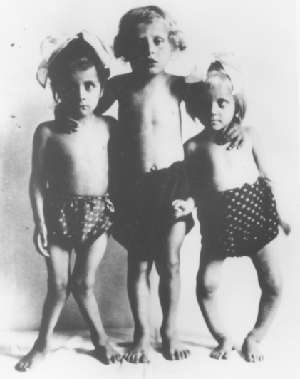 Then, in the 1920s, children’s health began to improve. Better health care, nutrition, and availability of healthy foods resulted in fewer child deaths than in previous years. In 1929, Congress did not renew the legislation benefiting maternal and children’s health programs. Because of this decrease in federal financial support, at the beginning of the Great Depression, there was a shift from federal to locally funded programs, so there were less health services available for children. This caused reductions in the health budgets across the nation, resulting in an increase in the number of children with rickets and malnourished babies (King 141). A 50% increase in malnourished children was recorded by the New York City health department from 1928 to 1932. However, after 1932, children’s health began to improve with an increase in the number of new facilities and government programs (King 141). (1) Then fifty years later, in the 1980s, according to a site about Hunger and Food Insecurity in the US, America saw a significant decrease in the number of public welfare programs. This resulted in an enormous increase in demand for emergency food, especially among families with children. The circumstances like the aftermath of World War I, the Great Depression, and other unfortunate incidences in American history set back advancements in the well-being and healthcare of children.
 Although many problems relating to poor child nutrition in America's history are correlated with hunger and malnutrition, obesity has also played a major role in history, beginning in the 1950s with the introduction of fast food restaurants (Schlosser 242). These industries have and are still targeting and marketing to children according to Fast Food Nation. Fast food restaurants have become popular and because of their inexpensive, convenient, and tasty foods, they have become a cause of the growing child nutrition problem. Also, because fast foods offer cheap food alternatives, American families: poor, average, or wealthy, prefer to buy these unhealthy foods. (2)
CURRENT SITUATION:
To be simply explained, poor child nutrition can be caused by three factors: malnutrition, caused by poverty and lack of availability of food, obesity, caused by high-caloric diets and lack of exercise, and unhealthy eating habits, due to lack of awareness and education in the choices people make about nutritious foods for their children.
Recent history shows that, child malnutrition can be attributed to poverty in the United States. According to the 2005 Hunger and Homelessness Survey, 13,230,226 children under the age of 18 were in poverty during the year 2006. This is nearly 18.4% of children living in poverty. In addition to those children living in poverty, 12,712,000 children (11.4%) were getting insufficient amounts of food. According to FRAC's 2002 hunger statistics, the two ethnic groups that were affected the most by hunger problems were blacks and Hispanics, with 22% of homeless being African American and 21.7% being Hispanic.
Unemployment, another cause of poverty is also a factor contributing to malnutrition because if parents don't get paid, they cannot support their children, nonetheless give them food. Also according to the Homelessness Survey, in the year 2007, 4.6% of the country’s population was unemployed and 21 cities listed unemployment as a major problem and focus.
The United States government’s Food Stamp program has helped many malnourished children obtain food. This organization helps United States citizens deemed needy, permitting them to obtain a more nutritious diet through normal trades (shopping at a grocery store). Although many adults take advantage of this program, it is directly affecting children as well. According to the Food Research and Action Center, in 2003, 55% of food stamp recipients were children.

Although the government has set up certain acts and aid providing free food that is somewhat healthy and nutritious for children, these acts and programs do not reach a vast amount of needy children out there. According to the Food Research and Action Center, the Food Stamp program doesn’t give help to most families bordering poverty, who certainly have just as hard of a time as the homeless. Also, only 60% of the eligible needy people are actually receiving “help” from the government. This is another hole in the government’s plans to get rid of the child malnutrition problem. It is hard to get rid of a problem if everybody's needs aren't getting met. However, in 2003, according to FRAC,the government gave $22.88 billion to the Food Stamp program. This is a LOT of money being given to these unfortunate children and adults because of the fact that this program is 100% federally funded .
Obesity, another huge problem, among children is becoming an epidemic. According to 2004 Statistics on Obesity, approximately 17.5% of children (ages 6-11) and 17% of adolescents (age 12-19) were overweight in the year 2004. Each year, 1.26 million obese american children between the ages of six and ten are now suffering and dying from heart attacks (http://www.surgeongeneral.gov/news/testimony/obesity07162003.htm). The growing rates and prevalent occurences are due to families' heavy reliances on fast food industries. Other causes are increases in the availibility of high-caloric and fatty foods, as children are more likely to reach for that candy bar instead of the fresh spinach salad, and lack of enough exercise in and outside of schools.
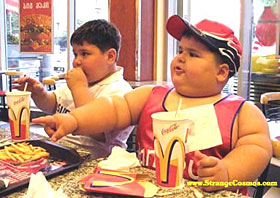
Super Size Me is a movie, made in 2004, that opens up one's mind about the realities and affects of the fast food industries. (3) Morgan Spurlock, the director and narrator of the film, challenges himself to eat McDonald's three times a day for thirty days. In the film, he talks about the ways in which Mcdonald's and other fast food chains are targeting children and luring them into eating their foods. Mcdonald's has their fun and happy clown, Ronald Mcdonald, whom everybody knows about. The movie shows that kids recognize the face of Ronald McDonald over the faces of George Washington and even Jesus. McDonald's has play places, all across the nation and world, that lure children into eating at their restauraunts so that they can play in these jungle gyms. McDonald's even has birthday parties for the kids. The two biggest things that have gotten children hooked on McDonald's are Happy Meals and kid's toys. The restaurant chain has made eating meals fun and enjoyable; now if we could only do that with healthy foods! Also according to the movie, kids see over 10,000 advertisements for sugary, fatty foods, fast food restaurants, and other places that house these deleterious foods, a year. McDonald's and other fast food restaurants on average spend way more money on TV commercials and other forms of advertising annually than fruit and vegetable or other healthy food companies spend. And we wonder why fast food restaurants are so popular! Yet this is the problem- companies that sell healthy foods or healthy restaurants do not advertise nearly as much as unhealthy food companies and restaurants do. These proponents of healthy foods for children also do not make eating healthy foods as fun as McDonald's and other unhealthy food restaurants make eating bad foods.
Another component to the obesity problem with children is the lack of physical education in schools. Although there are many opportunities for children today to play sports and be active, there isn't much motivation to do so. According to Overweight and Obesity Statistics, only 25% of young people (age 12-21) engage in light-to-moderate activity nearly every day, 50% engage in vigorous activity, and 25% do not engage in any vigorous physical activity. Our government does give billions of dollars to the health industry to take care of obese people. Also according to the above statistics site, the direct cost of obesity is $117 billion and the direct cost of physical inactivity is around $24.3 billion. This is a ton of money being given to people who most of the time could help themselves and their children by not eating so many fatty foods and getting the recommended 60 minutes of exercise a day. This is not good for our children today. Children, our leaders and future of tomorrow need to be healthy so that they can better the world by setting good examples.
Many people in America today have no idea how many servings of food they should be receiving each day, much less for their own children.
 If parents, teachers, and other adults do not know daily requirements children should be acquiring, children will definitely not know. However, in these past couple of years, the United State’s government has done its best to influence the kinds of foods and type of nutrition children receive with a big national program called the WIC Reauthorization Act. It seems as though the government has recognized the problem with our unhealthy children and has finally started to do something about it.
 In 2004, George W. Bush passed the Child Nutrition & WIC Reauthorization Act of 2004. This act expanded the availability of nutrients from snacks and meals to children in school, outside school hour programs, and children in child care. The bill also made paper work easier, pushed for healthier foods within the state’s programs, extended the eligibility age to receive nutritious free food to age 18, and extensively helped runaway, migrant, and homeless children. This new act replaced the former Mckinney-veto Homeless Act. The new act was beneficial to runaway, migrant, and homeless children because it granted them free meals and snacks without question, whereas the McKinney-veto Homeless Act made children file a report and request to be granted free meals and snacks. This new WIC act is very beneficial and kills two birds with one stone; it offers poor children nutritious and healthy foods/snacks, because foods many food shelters and programs give children are normally not the healthiest.
Still, many parents and other adults do not know what and of how much food they should be feeding their kids. According to a Kid's Guide to Eating Right site, children need whole grains, vegetables, fruits, milk and dairy products, meat, beans, fish, nuts, and plant oils. Parents should also urge children to take multivitamin pills, gummies, or chewable tablets because children are growing and cannot meet the recommended daily vitamin requirements just with eating their normal foods. Parents can check below under typology of services to see the different websites that offer daily nutritional requirements of foods and vitamins as well as everything one needs to know about keeping your child healthy. If more parents, teachers, and adults who greatly affect children become educated and are more aware of child nutrition, the better off we all will be, knowing that there are people who are actually making an effort to solve this problem. Also, the more fun and interactive parents, teachers, and others become with kids encourages kids even more to eat healthy.

WHAT CAN BE DONE:
There are some programs offered to care for the health of children on a national level, but more money should be given in the national budget to support child health and nutrition. According to an article published by the American Academy of Pediatrics, in 2006, President Bush proposed to cut or eliminate a number of health and child-care programs. Regardless of the outcome of request made by the President, it is important to consider both the consequences of such a cut in budget as well as the reasoning behind it. Where would the millions of dollars cut from child heath-care be used? The health of America’s youth is first and foremost a priority, because we must keep our Nation healthy and strong so that future generations will be able to care for America like we care for it now. It is important to set up America’s youth for success, and cutting State Heath Insurance, Emergency Medical Services, and many other programs offered for children and adolescents would only hinder the strength of our youth.
In addition to giving more money to the health care of children nationwide to improve malnutrition, obesity, and unhealthy habits, there needs to be better promotion of existing programs and more educational opportunities created for people interested in learning about health for themselves and their children. As a nation we should focus an equal amount on the prevention of child obesity, malnutrition and unhealthy habits as we do on the treatment of them. It is equally important to prevent these problems, as it is to treat them after they take effect. If possible, the number of fast food restaurants should be limited by the government so that it is still an option for Americans who cannot afford anything else, but is less tempting for families who don’t need it. Commercials should be made revealing the ways fast food marketers target children, similar to the commercials made exhibiting cigarette companies catering to younger individuals. Individual money incentives should be offered to American families who don’t eat fast food and to families who attend informational meetings about child health and nutrition. State money incentives should be given to states who lower the number of children suffering from malnutrition and child obesity within their area. By taking small but significant steps, American children can improve their health and happiness.
INDIVIDUALLY, WHAT YOU CAN DO TO HELP:
IMPORTANT:
This month (September 2007) Congress plans to send the president legislation that would make stronger an effected child health insurance program to serve an additional four million needy children. 19 more votes are needed from the House representatives to pass the legislation. Please take action and urge your representative to vote to override the president's veto of the legislation to improve child health care. Visit this site to write to your representative and read more about the legislation: http://www.fcnl.org/action/alert.htm
*KEY: you can help in all three categories, or specific ones
1) Unhealthy habits-lack of education
2) Poverty-malnutrition
3) High calorie diets and lack of exercise-obesity
Activism/advocacy
1) -Protest at your state capitol to push for more extreme education and promotion of the value of nutrition and the food pyramid at public schools.
-Protest/don’t purchase any foods that are not of good nutritional value.
-Write to your state capitol pushing for supplements to the bill passed by George Bush
-Write to various nutrition organizations and offer to promote their ideas and posters around your community
2) -Protest at the state capitol, advertising the number of children who are malnourished due to reasons such as poverty.
-Organize a group of friends who would be willing to start an organization/type of aid for the less fortunate.
3) -Organize a group of people to pass out and sell books full of recopies that are both healthy and delicious.
-Make a brochure much like the “Fast Food Nation” book or “Super Size Me” video and pass them out all around Fast Food Restaurants.
Charity/Philanthropy
1) -Donate money to Organizations such as FRAC that support healthy eating/nutrition habits.
-FRAC (Food Research and Action Center)
http://www.frac.org/
-American Heart Association
http://www.americanheart.org/presenter.jhtml?identifier=1200010
-American Academy of Family Physicians
http://familydoctor.org/online/famdocen/home/healthy/food/improve/369.html
2)If you are poverty stricken:
-Apply for food stamps from the city
-Go to a local organization that gives out food to individuals/families in poverty
-Go to your state library and visit http://www.frac.org to receive more information/links to helpful organization's websites.
If you are not in poverty:
-Donate to your organizations that give out food to the underprivileged, such as the American Red Cross.
http://www.redcross.org/
3) -Donate money to national fitness centers such as 24 Hour Fitness or Gold’s Gym. These fitness clubs promote healthy choices and provide a workout place for many Americans to work out and stay fit.
Citizenship
1, 2, 3) -Support congressmen, such as Maize Hirono who have some kind of healthy nutrition concerns, plans to help the less fortunate, and/or obesity-fighting ideas for the future.
Direct Service
1) -You can post up flyers of the new food pyramid (www.mypyramid.gov/)or other important child nutrition facts you think people should know about around your neighborhood or give them to parents and teachers you know
1, 2, 3) -Create a website, write a book, or put out a movie, like “Super Size Me”, that gets people interested in the dangers of high poverty levels related to malnutrition of millions of children around the nation, our nation’s obesity problems, and the lack of children educated in the area of nutrition.
Lifestyle/Personal Gestures
1) As a parent of children:
-you can promote the usage of the "new" food pyramid.
http://www.mypyramid.gov/
-you can visit the many kid’s health and nutrition websites:
http://www.kidshealth.org/kid/stay_healthy/food/pyramid.html
http://www.ext.nodak.edu/food/kidsnutrition/parent.htm
http://www.keepkidshealthy.com/nutrition/index.html
-go online with your kids and play fun games that teach your child about healthy foods:
http://www.fns.usda.gov/tn/Resources/mypyramidblastoff.html
http://www.ext.nodak.edu/food/kidsnutrition/kids-2.htm
http://www.nutritionexplorations.org/kids/main.asp
-Laminate/post food pyramid, vitamin/mineral requirements, and other health tips on your refrigerator to reference to
-Prepare and provide foods that are healthy for your children from healthy recipe books or nutritious recipes of websites, based on the food pyramid and the intake requirements off of a site above.
2) -Be more aware of the number of people in the nation who cannot attain the amount of nutrition due to the reasons like poverty.
3) -Force yourself to create days of the week in which you exercise and if you are a parent, plan activities with your child.
-Find an activity that you like! Whether it is walking, jogging, aerobics, yoga, hiking, etc.
Public Scholarship
1, 2, 3) -Conduct research and submit your ideas to national organizations such as…
http://www.frac.org
http://www.usda.gov/wps/portal/usdahome
http://www.eatright.org/cps/rde/xchg/ada/hs.xsl/index.html
Religion/Spirituality
3) -Participate in spiritual/ethnic workouts such as Yoga, Judo, Jujitsu, etc.
Vocation/Call
1, 2, 3) -If you feel motivated by us, you can even start your own charity organization or program that donates food or money to unfortunate children, educates people about children’s health and nutrition, or helps with the obese problem in America
CURRENT PROGRAMS RUN NATIONALLY:
Listed below are programs run nationally to keep the children of America healthy.
The Department of Education Office of Hawaii Child Nutrition Programs (State Agency) holds the agreement with the USDA and is responsible for the administration and monitoring of all Child Nutrition programs in Hawaii. These programs include, the Child and Adult Care Food Program (CACFP), School Lunch Program (NSLP), School Breakfast Program (SBP), Special Milk Program (SMP), Summer Food Service Program (SFSP), and Team Nutrition.
Child & Adult Care Food Program (CACFP)
This program plays a vital role in improving the quality of day care for children and elderly adults by making care more affordable for low-income families. 2.9 million children and 86,000 adults receive nutritious meals and snacks each day through this program. To see if your child is eligible or to read more about the program, visit:
http://www.fns.usda.gov/cnd/care/
School Lunch Program (NSLP)
This is a federally assisted meal program operating in public, non-profit private schools and residential child care institutions. It provides nutritionally balanced, low-cost or free lunches to children each school day. The program was established under the National School Lunch Act, which was signed by President Harry Truman in 1946. For more information about the National School Lunch Program, visit:
http://www.fns.usda.gov/cnd/Lunch/default.htm
School Breakfast Program (SBP)
The School Breakfast Program provides cash assistance to states in order to operate nonprofit breakfast programs in schools and residential childcare institutions. The Food and Nutrition Service (FNS) administer the program at federal level. State education agencies administer the SBP at state level and local school food authorities operate it in school. Just like the NSLP cash subsidies are received from the USDA (US Department of Agriculture) for each meal served as long as it meets requirements and is offered for free or at a reduced price for children who qualify. For more information regarding the School Breakfast Program (SBP) visit:
http://www.fns.usda.gov/cnd/Breakfast/Default.htm
Special Milk Program (SMP)
This program provides mild to children in schools and childcare institutions who do not participate in other federal meal service programs. The program reimburses schools for the milk they serve. To explore more options and facts about the SMP visit:
http://www.fns.usda.gov/cnd/Milk/Default.htm
Summer Food Service Program (SFSP)
“Welcome to the Summer Food Service Program! SFSP is the single largest Federal resource available for local sponsors who want to combine a feeding program with a summer activity program. Children in your community do not need to go hungry this summer. During the school year, nutritious meals are available through the National School Lunch and School Breakfast Programs. But those programs end when school ends for the summer. The U.S. Department of Agriculture's Summer Food Service Program helps fill the hunger gap.” (1) For more information about the Summer Food Service Program visit:
http://www.fns.usda.gov/cnd/summer/
Team Nutrition
“Team Nutrition's Goal is to improve children's lifelong eating and physical activity habits by using the principles of the Dietary Guidelines for Americans and MyPyramid.” (2) For more information about Team Nutrition, visit:
http://www.fns.usda.gov/tn/
In addition to these specific programs, please visit: www.frac.org/ to see the Food Research and Action Center (available nationally). This excellent website can be used to learn more about the problems with children nutrition, diet, and hunger in America as well as some programs available to alleviate these problems.
(1) http://www.fns.usda.gov/cnd/summer/
(2) http://www.fns.usda.gov/tn/
CHILD NUTRITION PROGRAMS AREN"T HELPING-
CHILDHOOD OBESITY EPIDEMIC-
CHILD VIDEO TO ENCOURAGE KIDS TO EAT HEALTHY-
PARENT'S VIDEO WITH A REAL NUTRITIONIST-
WE HOPE THAT WE MOTIVATED YOU TO WANT TO MAKE A DIFFERENCE IN THE LIVES OF OUR CHILDREN, JUST AS WE ARE MOTIVATED TO TELL YOU ABOUT CHILD NUTRITION AND ITS PROBLEMS! SPREAD THE WORD AND LET OTHERS YOU KNOW ABOUT THIS SITE. THE MORE PEOPLE WE GET EDUCATED ON THIS SUBJECT, THE MORE CHANCE WE HAVE OF CURING THESE PROBLEMS AND PREVENTING FUTURE ONES. IF WE CAN MOTIVATE YOU, IMAGINE WHAT AMERICA COULD BE MOTIVATED TO DO IF WE ALL JOINED HANDS IN STANDING UP FOR OUR CHILDREN...
Footnotes:
(1) King, Charles. Children’s Health in America: A History. New York: Twayne Publishers, 1993.
(2) Schlosser, Eric. Fast Food Nation: The dark side of the all-American meal. New York: Houghton Mifflin Company, 2003.
(3) Spurlock, Morgan (Producer & Writer). 2004. Super Size Me:. Appleton, WI: Kathbur Pictures.


